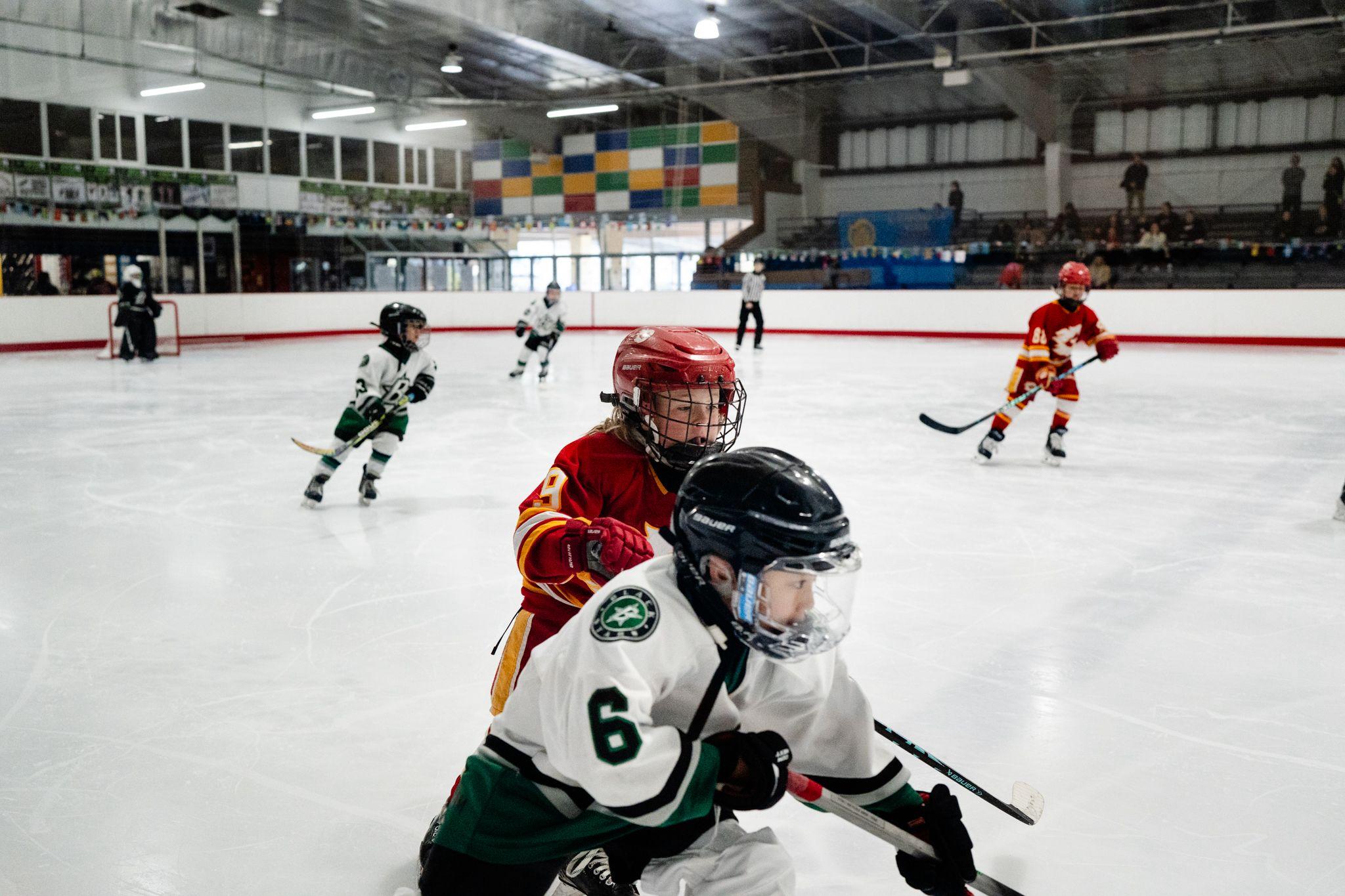
Act 1 — The Challenge
We flew to San Diego in January for a multi-team tournament at an unfamiliar rink. The crowd was bigger than anything we had played in front of at home. In the first period, we fell behind. The other team was reading plays faster — they knew where the puck was going before we did.
I was on the ice when they scored. I felt the momentum shift. The bench went quiet.
Score after Period 1: behind. Feeling: heavy.
Act 2 — The Analysis
During the intermission, I asked myself: what was different about them?
They were not necessarily faster skaters. But their positioning was smarter. Every player seemed to already be where the puck was going to be — not where it was. That is what our coach calls "playing ahead of the puck." I had heard the phrase many times, but I never truly felt the difference until I saw it used against us at full speed.
I also noticed they were communicating constantly. There was always a voice calling out which side was open. Our team was mostly quiet in the first period — everyone processing on their own.
Two things to fix: position before the puck arrives, and talk more.
Act 3 — The Action
In the second and third periods, I made one rule for myself: before I receive the puck, I look up. Every single time. Where are my teammates? Where is the pressure coming from?
We came back and won in the third period. The game felt completely different — not just the score, but the energy on the bench.
After the game, we walked over to the USS Midway aircraft carrier by the bay. Standing on the deck, I thought about how the Navy crew had to be precise — communicating constantly, everyone knowing their role exactly. No wasted movement. No silence when action was needed.
That is what a good hockey line looks like too.
**Training focus going forward:** practice the look-up habit before every pass in drills — not just in games. Communication only becomes automatic when it is drilled into muscle memory.